Put on a fresh pot of coffee, folks, because I have a lot of reading for you this Monday morning.
Last week saw the publication of a ton of new articles by me. Not only that, the articles themselves stand out from everything else that I've done so far this year.
Let's start with my latest feature for TakePart. This massive article -- my longest and most complex to date -- took me high into the Oregon mountains and (by phone) to forests around the world. It was tough work, but boy was it worth it:
Drones' New Mission: Save the Forests
My next piece is also something different for me. Motherboard spent all of last week telling stories of what they called the Silicon Divide, about how women are underrepresented in and by technology. As part of
the series, they asked me to write an essay about my attempts at source
parity. Now, I never write essays, but this was an important topic to explore and it generated an unbelievable response from readers. Check it out:
What Happened When I Pushed Myself to Interview More Women
Moving on to publisher number three, here's my latest for Audubon, one of my most inspiring wildlife stories in a long time:
Endangered Hawaiian Bird Immortalized In Space
On a completely different subject, Slate dropped me a line last Monday and asked me to write this, my first piece for them:
This Week’s Back-to-Back Earthquakes Don’t Mean the World Is Ending
Getting back to TakePart, here are two new news articles from my regular wildlife beat:
The Information Age Is Failing the World’s Wildlife
Can a Park the Size of New York City Save Sumatran Rhinos and Tigers?
Finally this week, here's my latest high-tech careers feature for IEEE-USA InSight. It's a fun one:
Engineers & Entrepreneurs: Are You Missing this Key Skill?
Holy cow, what a week! I hope you enjoy reading them all. Meanwhile, keep checking Twitter for my latest headlines. This week coming week should be another exciting one.
Monday, April 25, 2016


Monday, April 18, 2016
Yet another tiger article (plus other stuff)

Please note, actually tackling tigers is highly discouraged.
6 Reasons Why We Should Still Worry About Tigers
Here's the next two, both for TakePart:
A Fungus is Wiping Out Australia's Unique Frogs
The Great Barrier Reef is Losing Its Strength to Fight Climate Change
Short list this time around, but I have soooooo many articles working their way toward publication in the coming weeks. None of them are about tigers. Yet.
Monday, April 11, 2016
Tiger Week (plus wolverines and work-life balance)
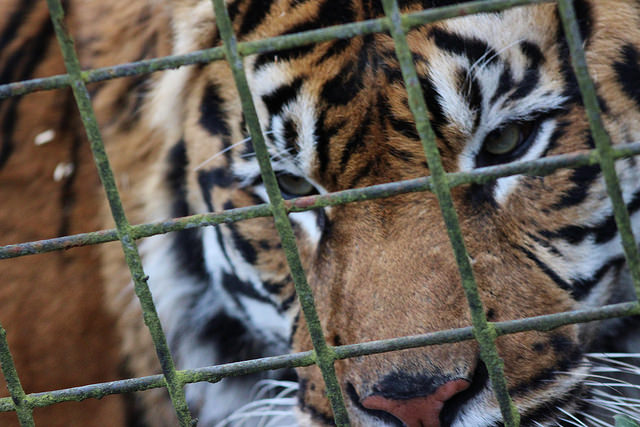
Let's start this list with three new "Extinction Countdown" articles for Scientific American, both of which are the latest chapters in stories that I have been following for, literally, years:
Big News: Wild Tiger Populations are Increasing for the First Time in a Century
Bat-Killing Fungus Spreads from Coast to Coast
U.S. Finally Closes Tiger Commerce Loopholes
Next up, two new tales for TakePart:
Oil Drilling, Mining, and More Threaten Unique Ecosystems Around the World
Judge Tells Wildlife Agency to Protect Wolverines From Climate Change
Finally this week, here's my latest careers article for IEEE's The Institute:
Being in Tune With Yourself Is the Secret to Work-Life Balance
Lots more in the weeks to come!
Monday, April 4, 2016
Comic Einstein, Blind Birds and Sagging Sea Turtles
Hey folks, welcome to Monday once again. I hope you had a great weekend and that your morning coffee is nice and warm because I have quite a few article links for you this week.
 First up, something unusual. I mostly write about wildlife these days, but when an editor asks me to write about comic books the answer is always yes. Hence this piece for From the Grapevine:
When Superman met Einstein: A history of Albert Einstein’s comic book appearances
Next up, my second story for Audubon:
Scientists Solve A Shag-adelic Bird Mystery
Of course, that brings us to this week's "Extinction Countdown" articles for Scientific American:
Coelacanth, the Famous "Living Fossil" Fish, Gets Endangered Species Act Protection
What's Blinding (and Killing) This Rare Scottish Bird?
 Finally this week, here are three big new stories for TakePart:
The Recovery of the World’s Most Endangered Sea Turtle Has Stalled
South African Rhinos May Get an Unusual Safe Haven: Australia
Orangutan Oops: Rescue Efforts Led to Genetic Mix-Ups Among Borneo's Endangered Apes
I have lots more in the works (some of which will be hitting the wires early this week), so make sure to follow me on Twitter for the latest links as they go live. Otherwise I'll see you here next Monday!

When Superman met Einstein: A history of Albert Einstein’s comic book appearances
Next up, my second story for Audubon:
Scientists Solve A Shag-adelic Bird Mystery
Of course, that brings us to this week's "Extinction Countdown" articles for Scientific American:
Coelacanth, the Famous "Living Fossil" Fish, Gets Endangered Species Act Protection
What's Blinding (and Killing) This Rare Scottish Bird?

The Recovery of the World’s Most Endangered Sea Turtle Has Stalled
South African Rhinos May Get an Unusual Safe Haven: Australia
Orangutan Oops: Rescue Efforts Led to Genetic Mix-Ups Among Borneo's Endangered Apes
I have lots more in the works (some of which will be hitting the wires early this week), so make sure to follow me on Twitter for the latest links as they go live. Otherwise I'll see you here next Monday!
Monday, March 28, 2016
Hiding Rodents, Disappearing Primates, 3-D Printing and Career Coaches
Hey folks! It's Monday again, which means I get to barrage share with you all of my articles from the previous week.
 Here they are, starting with two new "Extinction Countdown" articles for Scientific American:
Is This Super-cute Rodent Extinct or Just Hiding?
Climate vs. Primate: Dawn of Extinction?
Next up, a cool wildlife/tech story for TakePart:
Faking Out Poachers With 3-D-Printed Sea Turtle Eggs
Also for TakePart, their annual Animal Bracket -- a kind of March Madness for wildlife. I wrote all the descriptions, and each click generates money for conservation, so check it out.
Finally this week, my latest tech careers article for IEEE-USA InSight:
Put Me In, Coach! An Engineer’s Guide to Career Coaching
That's it for now, but holy cow do I have a lot in the works. I'm tying up a half-dozen big assignments while continuing my ongoing news assignments. On top of that, I got four new gigs last week from four different magazines. Come on back here each week to see which stories have been published, or follow me on the Tweet Machine for headlines as they happen.

Is This Super-cute Rodent Extinct or Just Hiding?
Climate vs. Primate: Dawn of Extinction?
Next up, a cool wildlife/tech story for TakePart:
Faking Out Poachers With 3-D-Printed Sea Turtle Eggs
Also for TakePart, their annual Animal Bracket -- a kind of March Madness for wildlife. I wrote all the descriptions, and each click generates money for conservation, so check it out.
Finally this week, my latest tech careers article for IEEE-USA InSight:
Put Me In, Coach! An Engineer’s Guide to Career Coaching
That's it for now, but holy cow do I have a lot in the works. I'm tying up a half-dozen big assignments while continuing my ongoing news assignments. On top of that, I got four new gigs last week from four different magazines. Come on back here each week to see which stories have been published, or follow me on the Tweet Machine for headlines as they happen.
Monday, March 21, 2016
Parasites and Pangolins
 |
| "Feed me!" |
Meet the Tiny Parasitic "Corpse Flower" that Smells Like Coconuts
Elephants, Pangolins, Bees Proposed for Greater Endangered Species Protections
Marines to 1,100 Endangered Desert Tortoises: Move Out
Did China Just Create a Model for Recovery of the World’s Forests?
More next week! Or follow me on Twitter for headlines as they happen.
Friday, March 18, 2016
From the Archive: Why Women Leave Engineering
Stemming
the Tide: New Study Examines Why Women Leave Engineering
By John R.
Platt
(Originally published by Today's Engineer, April 2013)
After years
of increases, the number of women graduating with undergraduate engineering
degrees in the United States actually fell in 2009, when just 17.8%
of engineering graduates were women.
But the
number of women actually working in engineering is even lower. According to the
National Science Foundation, only 11% of practicing engineers are women.
The
disparity between those numbers leads to an important question: Why do many
women choose not to stay in engineering careers? Conventional wisdom gives us
one answer, telling us that many women engineers leave their careers to devote
time to their families. But a new study says is not the case, and that the
engineering culture is often more to blame.
Stemming the Tide
Workplace
climate is a strong factor in why women leave engineering, according to the report,
"Stemming the Tide: Why Women Leave Engineering," published in March
by the Center for the Study of the Workplace at the University of
Wisconsin-Milwaukee. (The report is available in PDF format here.)
The study
was conducted by Dr.
Nadya Fouad, professor with the Department of Educational Psychology, and Dr. Romila
Singh, associate professor of organizations and strategic management, Lubar
School of Business.
"I have
studied career decision making for a long time," says Fouad. "Some of
my current students came to me from a career in engineering, and one of them,
Mary Fitzpatrick, said, why don't we look at why women leave engineering?"
A small grant led to a pilot study, after which Singh came on board. The
National Science Foundation provided a grant for the full study, which began in
November 2009 and approached female alumni from 30 universities. But word of
the study grew and many more women participated. By January 2011, more than
3,700 women from 230 universities had responded.
The women
fell into four groups: people who had earned engineering undergraduate degrees but
never entered the engineering field; women who left the field more than 5 years
ago; women who left the engineering field less than 5 years ago; and those who
are currently working as engineers.
"We
were surprised about how much interest was sparked," says Fouad.
"Women were very interested and very involved in contributing to the study.
They sent the survey link along to their friends. They all showed so much enthusiasm
and willingness to participate."
Surprising Results
The study
asked women why they had left their engineering careers, and the answers came
as a surprise. "The common perception is that women are leaving for taking
care of their families," says Fouad. "But that's clearly not true.
They left the profession for organizational culture reasons."
Among the
common factors that women cited as their reasons for leaving the profession
were too much travel, working too many hours, lack of real or perceived
opportunities for advancement, and uncivil work environments where women were
treated in condescending or patronizing manners. Only 25% of the women who left
engineering did so for family reasons.
"Even
for the women who did leave for family reasons, companies did not provide the
necessary support that would have prevented them from leaving," says
Singh. "When faced with an intractable workplace, 60-plus hour workweeks,
travel, and working weekends and late nights, the women made the decision that
was in their best interest at that time – which was to leave."
Another
surprising result was the "strong tie between leaving a company and
leaving the profession," says Singh. "The bad experiences these women
had at work transmitted to their experience with the profession as a whole. Women
engineers who expressed a strong intention to leave their company also harbored
strong intentions to leave the profession."
The study
also found that 15% of women who earn undergraduate degrees in engineering never
entered the profession at all. Many of them went on to enter the legal or
medical professions or other fields where their engineering education served
them well. "We got a number of comments from these women who said that
their skills helped them," says Fouad. "Engineering teaches
analytical thinking and problem solving. They said these skills got them to
where they wanted to go with their careers."
"If one
could draw a parallel between engineering and other rigorous college programs,
you don't hear too often about prospective doctors and lawyers going into med
school and law school to train for a career in something else," says
Singh. "This group of women engineers went to the top schools in the
country so that they could use their training in a different field. For the
engineering profession, it's not a good return on investment. It's a loss to
the profession."
While some
women never intended to become practicing engineers, others went through their
engineering education and then decided not to enter the profession. "It's
troubling that we have women who took this very rigorous curriculum then
decided, this is not for me," says Fouad. The study found that a third of
the women who never entered the profession felt that it was an inflexible work
environment that would not support women. Another 30% said they lost interest
in engineering by the time they received their degrees.
The Good News
"The
positive takeaway from this study is that 2,100 current engineers responded to
the survey, and they're still working," says Fouad. Indeed, more than half
of the women who responded to this study are still working in engineering
careers, and their experiences and comments help illustrate the best ways to
"stem the tide" of women leaving the profession.
According to
the study, the support of supervisors and co-workers is a critical factor in
keeping women in the profession. As the report states, "Current women
engineers who worked in companies that valued and recognized their
contributions and invested substantially in their training and professional
development, expressed greatest levels of satisfaction with their jobs and
careers."
Giving
people the tools they need to manage both their jobs and live their lives is
also critical. The study found that women who could confidently manage both
their office's political landscape and their multiple life roles were more
satisfied both at work and at home, and more likely to stay in the profession.
"It's a
lot of little things that can make a difference in retaining women engineers,
and these are specific to all employees, not just women," says Singh.
"Employers can start by clarifying what a person's goals and objectives
are, and what the procedures for achieving them are, while they undertake the
bigger task of culture change."
The authors
also suggest managers do some self-examination to determine what activities
they are rewarding. "Do they expect people to stay and work late,"
asks Singh. "Which is more important, quality or face time? Are they using
different criteria for men and women?"
What Comes Next?
Fouad and
Singh are currently planning a couple of follow-up studies to "Stemming
the Tide." They are also blogging about the
first study, and encourage people to voice their thoughts on it as well.
They don't
plan on studying only women, either. "This is not a 'woman problem',"
says Fouad. "This is the engineering profession's problem. There are
things we can do."
Subscribe to:
Posts (Atom)