Showing posts with label profiles. Show all posts

Monday, December 5, 2016

Sharks that Walk and Coral that Dies

Hey folks, happy Monday. December is here and the mad rush toward the end of the year has begun. Maybe that's why I had so many articles appear last week, and why I'm working on so many more.

This week's articles cover a pretty wide range of topics, but they also have some thematic overlaps. A couple of articles address coral ecosystems and the creatures that live in them, while a few more deal with life in the Arctic. There's some parallel between a piece about a day about extinction and an attempt to bring lost species back. Finally, there's a general theme of resiliency in the face of climate change and other threats.

A walking shark. Left, right, left, right...
But enough about themes. Let's get to the articles themselves. I'll start this week's list with my latest "Extinction Countdown" articles for Scientific American:

Another Arctic Species Losing Out as Sea Ice Declines: The Ivory Gull

Walking Sharks at Risk


Next up, three new pieces for TakePart:

A Day to Mark Fallen Species

Gone for 400 Years, Returned Beavers Get Protected Status in Scotland

19 Ways Arctic Climate Change Could Unleash a Global Catastrophe


After that, here's my latest article for Hakai Magazine:

There Is Life on a Dead Coral Reef


And finally this week, here's the third part of my epic trilogy about Einstein and comic books for From the Grapevine. This is half personal essay, half history lesson:

Meet 'E-Man,' the superhero inspired by Albert Einstein


That's it for this time around. Come on back next Monday for another batch of articles. Hey, it's better than hitting the mall for holiday shopping!

Monday, October 10, 2016

Crows + Marijuana + Einstein

Welcome to a new week! Here's another batch of articles for your Monday morning eyeballs.

Source: Nobrow Press
Let's start with two positive conservation-themed stories, the first for Audubon, the second for Scientific American:

The Hawaiian Crow Is Ready to Make Its Big Comeback

Great News for Rhinos, Pangolins, Parrots, Sharks and Chambered Nautilus


Next up, an interesting news story for TakePart:

The Marijuana Boom Is Contributing to the Climate Crisis


And finally this week, an interview with a graphic novelist for From the Grapevine:

Einstein gets graphic in new biography


More next Monday -- or follow along on Twitter for headlines as they go live.

Monday, August 29, 2016

Elephant feet, science detectives & wrong rocks

As hard as my regular readers may find this to believe, I try not to write about elephants too often. Oh, sure, the elephant poaching crisis is an unbelievable nightmare, but there are so many other species to write about that. Elephants can't get all the press.

That's why this week's first article was so important. I not only got to write about elephants, it's a story that also involves at least 61 other species:

The Amazing Biodiversity within an Elephant's Footprint


That article was for Scientific American, as was this one:

How Invasive Species (Slowly) Push Plants Toward Extinction


Next up, my latest for TakePart, which quite accidentally happened to run on the centennial of the National Park System:

The New Graffiti: National Parks Fight Stone Stackers


Finally this week, here's a story that combines science and 30 years of detective work, my latest for Hakai magazine:

It’s Happening Now: Climate Change Is Killing Off the Yellow Cedar


That's it this time around. I have lots more pending publication. Follow me on Twitter for headline as they go live, or come on back here next Monday for another list.

Wednesday, July 27, 2016

RIP, Richard Thompson

I am saddened today to hear of the death of cartoonist Richard Thompson, who succumbed to Parkinson's after a long struggle. Here's an article I wrote about him and efforts to help him back in 2011. Originally published at Tonic.com.


Comic-Strip Fans Team Up to Fight Parkinson's Disease

When cartoonist Richard Thompson announced he had Parkinson's disease, one fan stood up to help make a difference.

Even though it is just a few years old, the comic strip Cul de Sac has already earned a legion of die-hard fans through its chaotic energy and vibrant characters. So when cartoonist Richard Thompson announced that he had been diagnosed with Parkinson's disease, a brain disorder that can lead to tremors and more extreme physical coordination problems, his fans sat up and took notice.

One of those fans was Chris Sparks, a graphic designer and web developer in Asheville, N.C., who had met Thompson at a comic-book convention in 2008. The two became friends, and Sparks was building a website for Thompson when the artist announced his diagnosis.

"I started reading more about Parkinson's," says Sparks. His reading included books by Michael J. Fox, perhaps the world's most famous person with Parkinson's. "I was really touched," he says. Sparks visited the Michael J. Fox Foundation website and saw that people could form public fundraising teams to raise money for Parkinson's research. He quickly decided to form his own team: Team Cul de Sac.

But Sparks decided to take a different path than most "Team Fox" fundraisers. He has reached out to dozens of cartoonists around the world, who will be submitting artwork inspired by the Cul de Sac strip for inclusion in a book which Thompson's publisher, Andrews McMeel, has agreed to release next year. Some of the proceeds from the book will go to the foundation, but after the book is released, the artwork will also be auctioned off, with all proceeds going to Fox Foundation. The ultimate goal is to raise $250,000 for the foundation.

"We've already had around 60 people say they're interested in contributing," says Sparks. "Cartoonists, fine artists, anyone who wants to contribute is great. My goal is to get as many as possible."

One cartoonist who has already turned in his contribution is Alaska's Peter Dunlap-Shohl, who also has Parkinson's. "It always brightens my day when I get an email from someone who has Parkinson's who is touched that we are doing this different thing with a sense of humor," says Sparks.

Although many people with Parkinson's are private about their conditions, Thompson is not one of them. He's happy to put his support behind the project. "Parkinson's was described to me as a disease that first robs you of your dignity. So it's fitting to combat a slapstick disease with cartoons," he says.

The Team Cul de Sac fundraising page has full information on how artists can contribute to the project, as well as how others can donate toward their fundraising goal.

"I think we can make a difference," says Sparks, who points out that his love of comics inspired him. "I've been reading comics since I was five years old, and most of the cartoonists I've met have been wonderful human beings," he says. "They've made a difference in my life, and I hope to make a difference as well."


Image originally courtesy of Richard Thompson.

Monday, May 9, 2016

Extinction, Consumerism and Ghosts

Hey folks, it's Monday again, which means it's time for another batch of headlines representing my latest publications.

First off, remember my bleak article about antelopes from last week? Well, the news got even worse for one species. Here's the news, my latest "Extinction Countdown" article for Scientific American:

Only Three Addax Antelopes Left in the Wild?


Next up, three powerful pieces for TakePart:

Preaching Against Extinction (my interview with Reverend Billy and the Stop Shopping Choir)

Hunting Wolves Hurts Tourism

‘Ghost Gear’ + Climate Change = Bad News for Lobsters


Finally, let's end with something completely different, my latest tech careers article for IEEE's The Institute:

Five Ways Engineers Can Improve Their Writing


Next week...another antelope article? Probably not, but you never know!

Monday, October 19, 2015

Who Says Endangered Species Can't Be Funny?

If you're read this blog before, you know that I have two great passions: endangered species and cartooning. Those two topics collided in this article for Scientific American:

Nextinction: Ralph Steadman Goes Gonzo for Endangered Birds


I wrote one other SciAm article this week, but it was slightly less fun:

Frog Mass Extinction on the Horizon


Speaking of less fun, yeah, here are three more downers for TakePart:

When Butterflies Shouldn't Fly Free

China’s Obsession With Pet Turtles Threatens a Rare Philippine Species With Extinction

A Rare Chance to Save an Entire Nation’s Frogs From Extinction


Yes, there were some negative articles this week, but take a closer look -- almost all of them mention the things people are doing (or can do) to turn things around. That's why I do this. There are heroes out there, and there are solutions.

More next week. As always, if you can't wait until then you can also follow me on Twitter, where I'll post headlines as they go live. Some of them may even be fun!

Monday, November 11, 2013

Rare Cats, Melting Starfish and a Man with Wings

Well, this past week didn't see all that many new publications, but that's only because I have so many in the pipeline. I have more articles in process or pending publication than I can count, so expect a lot more soon.

Meanwhile, here are this week's articles, starting with one article and one shorter post for "Extinction Countdown" over at Scientific American:

Beautiful but Rarely Seen Cat Species Photographed in Borneo

Sunday Species Snapshot: Sociable Lapwing


And here are three short pieces for Mother Nature Network:

Mysterious wasting syndrome is turning West Coast starfish into goo

Bill Gates: Prioritizing worldwide Internet access over human health is 'a joke'

Jetman ascendant: How Yves Rossy learned to fly with four jet engines strapped to his back


This coming week should be a big one. Follow me on Twitter for headlines as they happen and come back here next Monday for another list of links.

Monday, September 30, 2013

Climate change, conservation and comic books

Monday brings the end of another month and another list of links to my articles. Last week saw just five new articles, but they're good ones. Meanwhile I have dozens more (well, it feels that way) pending publication in the coming weeks.

First up this time around, my latest feature for Lion magazine, published by Lions Clubs International:

Helen Keller Reimagined


Next, my latest "Extinction Countdown" articles for Scientific American:

Piping Plovers in Migration: Foraging for their Lives

Dig This: Decline of Australian Digging Mammals Impacts Entire Ecosystems


And finally this week, here are two new pieces for Mother Nature Network:

New map identifies ecosystems most vulnerable to climate change

Yes, Vermont has a leaf forecaster


I won't be writing much this week -- I'll be traveling to the annual Society of Environmental Journalists conference -- but I do have several articles queued up with editors, so we'll see which ones appear. Follow me on the Tweeter for links as they happen (or, at least, as I know they happen).

Monday, August 19, 2013

An amazing teen inventor, tortoise symbiosis and New Zealand irony

Another Monday, another batch of the previous week's article links!

First up, here are my two Extinction Countdown articles for the week for Scientific American. Yes, I wrote about baobab trees and giant tortoises again!

Giant Tortoises and Baobab Trees: Imperfect Apart

Rare Monkey Population up 50 Percent in China and Tibet


Next, I hope you'll check out my latest feature for IEEE's The Institute. I have profiled most of the IEEE President's Scholarship winners over the last few years and it's always one of my favorite gigs. This young man is a real inspiration.

Communication Device for Deaf and Blind Wins IEEE President’s Scholarship


And finally, here are several science, health and eco-activism stories for Mother Nature Network:

Why do bacteria become virulent? It's all about the signal

Dislike: Facebook makes you sad, says study

New Zealand, the world's third-most obese country, threatens to deport obese chef

Author and activist Wendell Berry, called a modern-day Thoreau, receives prestigious prize


I'm working on something like five hundred and eighty-seven new articles right now. Make sure to follow me on Twitter for links as they go live!

Monday, July 29, 2013

Exclusives and features galore

Every Monday morning I do two things: look back and look ahead. Right now, you're seeing the looking back part. Last week brought a ton of new articles, including several stories that no other journalists have told and a couple of articles that have been in the works for months.

First up in this week's link parade, my usual two Extinction Countdown articles for Scientific American.

To Save the Sumatran Rhino, Zoo Will Attempt to Mate Brother and Sister

Endangered Plants for Sale Online: Are They Legal?


My latest feature for IEEE's publication The Institute came out this week. I love interviewing inspiring scientists and technology people:

IEEE Groups to Launch the First All-Women Start-ups in India


My latest article for Lion Magazine, the publication of Lions Clubs International, also hit the stands this week. I really enjoyed working on this one, and it's a great solution that could work for the many clubs around the country which are facing declining memberships:

Maine's Oldest Lions Club Gets Younger


And finally, here are a bunch of news stories for Mother Nature Network:

Could carbon dioxide be converted to electricity?

The best place for solar power is ... New Jersey?

CIA-funded project could control the weather

U.S. Navy drops 4 bombs on Great Barrier Reef

It's a banner year for mosquitoes

In addition to all of the links above, several of these articles were reprinted at the Huffington Post and Business Insider, but I'll spare you those links.

So what comes next? Well, looking forward, I can predict that this week will bring several new articles for SciAm and MNN, and I'll be finishing up a few articles for other publications. Other than that, I have several ideas bouncing around, and I think more than one of them will be coming to life soon. We'll see.

Until those ideas spring forth, feel free to follow me on Twitter. I'll announce new article links as they happen!

Monday, July 15, 2013

Sawfish, Big Data and Jumping Robots (and a whole lot more)

I hope you had your Wheaties for breakfast this morning, because I have a lot of new articles for you to read. This time around I'm bringing you two weeks worth of new links, which makes up for not doing one of these lists last Monday after the long Fourth of July holiday.

And really, that was the way to go. I only published a few articles in the short week before Independence Day, and waiting until after gave a chance for several articles that were pending publication to finally see the light of day. So let's get to it.

First up, three new Extinction Countdown columns for Scientific American, all of which are important:

After 100 Years, Has the Elusive Night Parrot Finally Been Discovered?

Last Chance for Sawfish?

As Rhino Poaching Surges, South Africa Proposes Legalized Trade in Precious Horns


Next, my latest Careers Watch article for IEEE-USA's Today's Engineer. Seriously, if you know a smart kid who wants a tech job, point them in this direction:

The Big Data Job Boom


In other IEEE publication news, here's my latest feature for their publication, The Institute. This has some great advice for consultants, freelancers and anyone who owns a small business.

For Consultants, Social Media 101


And finally, here are a whole bunch of news items for Mother Nature Network. I may have had too much fun writing one or two of these:

Meet ATLAS: The walking, jumping robot that could one day save your life

Mount Fuji and 18 other locations protected as UNESCO World Heritage sites

Arnold Schwarzenegger: Let's terminate climate change

'Gasland II' sequel tells fracking's next chapter

Warren Buffett donates $2.6 billion to Gates Foundation and other charities

What is an Earthship dwelling?


That's it for this time around, but I still have a bunch of articles waiting for publication that could see print this week (or not; we'll see), and lots of new stuff to write. Follow me a Twitter for links as they happen. Otherwise, I'll see you here next Monday!

Monday, June 17, 2013

Chimpanzees, Cybersecurity and Inventive Teens

Last week started off with a bang and then never slowed down. I interviewed some amazing people, saw several long-in-the-works features appear, fought off come climate-change-denying trolls, and generally had an amazing time. What can I say, I love the life of a freelance writer!

So what did all that excitement yield? Let's go to the links!

First up: This week brought some very cool stories for Extinction Countdown, including my 500th article for Scientific American!

Chimpanzees May Finally Gain Full Protection under the Endangered Species Act

Climate Change versus Groundhogs: Even Common Species Will Suffer

Diseased Tigers, Wounded Rhinos and Other Links from the Brink


Next up, my latest technology careers article for Today's Engineer. The dramatic need for people in this particular field is both terrifying and encouraging:

Cybersecurity Careers – An International Priority

(Seriously, if you know any students who aren't sure what technology career they want to eventually go into, point them in this direction.)


Next up, several articles for Mother Nature Network, including one long-gestating feature and three blog posts:

The Inventioneers: 6 teens invent way to stop dangerous texting while driving

OCD both triggered and treated in mice

RoboRoach: Now you can create your very own cyborg cockroach

Fracking companies are exploiting the Amish, say reports

Bee semen could help combat colony collapse disorder

Meanwhile, an earlier MNN feature on NASA's AirSWOT program was reprinted by the Huffington Post, which probably reprinted one or two other MNN articles. (It's kind of hard to keep track, honestly.)

That's it for last week. This week I'm working on several new SA and MNN articles, plus several features that will appear in the coming months. It's going to be another busy, fast-paced few days, so excuse me while I go get that adrenaline pumping!

Monday, May 27, 2013

Amphibians in crisis, a gene that itches, and a whole lot more

If it's Monday it must be time for a look back at my articles from the previous week -- even if it's Memorial Day. What can I say, freelancers don't always get to take holidays off.

I'll start this week's list with my Extinction Countdown articles for Scientific American, where amphibians found themselves on the bad side of the news:

Frog-Killing Chytrid Fungus Hits Rarely Seen, Wormlike Amphibians

Amphibians in U.S. Declining at “Alarming and Rapid Rate” (this was also reprinted at Salon)

A Monkey with Human Eyes and Other Links from the Brink


Next up, a big batch of articles for Mother Nature Network, including some pretty cool science:

Why we itch: Blame a gene called Nppb

Student filmmakers produce powerful documentary about sea turtle conservation

Fire ants inspire ideas for life-saving search-and-rescue robots

Mystery cause of Irish potato famine finally solved

Oman invests in solar energy -- to extract oil


Outside of the published articles I have also been deep, deep, deep into my next articles for Conservation magazine, Today's Engineer and The Institute, as well as several more articles for SciAm and MNN, plus a big batch of ten articles for another client and a two corporate newsletter gigs. PLUS, this week I got a call out of the blue that ended up being my first magazine cover assignment. So there's that.

Yeah -- busy, busy, busy!

Anyway, even if this is a four-day week, there will still be plenty of new articles. Follow me on Twitter for the latest links as they happen. And I'll see you here next week!

Monday, April 15, 2013

Diversity, new species & endangered cats

Another week, another nine new articles published, some of which have been in the works for months.

I'll start with this week's Extinction Countdown articles for Scientific American, which all garnered above-average readership:

The 6 Most Endangered Feline Species

Beautiful Striped Bat Identified as Entirely New Genus

Starving Orangutans, Dead Bats and Other Links from the Brink


Next up, my latest careers article for Today's Engineer. I interviewed some really great, enormously inspiring people for this piece. Endangered species may be my passion, but I really love working on these technology careers articles:

The Importance of STEM Diversity


And here are a whole bunch of thought-provoking new articles for Mother Nature Network:

Voice-over artist continues quest to regain his lost voice [This is a sequel to a very popular article I wrote in 2011.]

New tree-living porcupine species discovered

Another advantage of greener neighborhoods: Less crime

New laws would punish those who shoot undercover video of livestock abuse

Impact of Keystone XL pipeline examined in new e-book


That's it for this time around. Come on back next Monday for another link list, or follow me on Twitter for the links as they happen.

Monday, April 8, 2013

Bill McKibben, rare gibbons, entrepreneurship and a lot more

"You'll be back? You who? Back from where?"
The writing life is often full of unusual coincidences. For example, this week I was writing an article about robocalls when my phone rang. It was a robocall. A friend of mine took this as proof that Skynet has finally gone online. Me, I'm just glad that didn't happen when I was writing about poachers!

Anyway, here are this week's article links, barring any other unusual coincidences or circumstances.

First up, my three Extinction Countdown articles for Scientific American:

Poachers Have Killed 62 Percent of Forest Elephants in the Past Decade  [This was also reprinted by Business Insider]

Who Will Save the Last Hoolock Gibbons?

Ethiopian Lions, Sumatran Rhinos & Other Links from the Brink


Next, my latest business feature for IEEE's The Institute:

Legal Experts Offer Strategies for Entrepreneurs


Bill McKibben = Energizer bunny.
I wrote a whole bunch of articles for Mother Nature Network this week, but I'll start the list with this profile that took several weeks to pull together:

Bill McKibben: The Energizer Bunny of the climate fight

And now all of the rest, covering a cool mix of technology, science, achievements and weirdness:

Cow power: Fair Oaks Farms uses manure to fuel its dairy trucks

The new cold war: Russia is stockpiling snow for the 2014 Winter Olympics

Toxic smell in New Orleans may have refinery to blame 

Conspiracy theories bring out the tinfoil hat brigade.
Poll: 37% of Americans believe that global warming is a hoax

Robocalls be gone: FTC contest takes aim at annoying (and often illegal) phone calls

Fabled 'Gate to Hell' unearthed by archaeologists in Turkey

Teen with Down syndrome scales Mount Everest


That's it for now. This coming week should bring my latest technology careers article for Today's Engineer, as well as a ton of other fun stuff. Stay tuned for the latest!

Monday, April 1, 2013

Feral cats, awful allergies and local economies

Last week was slightly less productive than usual, as a weird little stomach bug took me down for most of Wednesday, Thursday and Friday. Luckily for both me and my readers I had been writing like a storm before that, so I had a bunch of articles already lined up for publication.

We'll start the link list, as I usually do, with my Extinction Countdown articles for Scientific American:

3,000 Feral Cats Killed to Protect Rare Australian Bilbies

'Extinct' Indian Gecko Rediscovered After 135 Years

Links from the Brink (this week's edition included news about manatees, rhinos, turtles and all kinds of other cool creatures, including the slender loris whose photo accompanies this blog post)


Next up, my latest feature for Mother Nature Network:

'Local Dollars, Local Sense' author preached sustainability before it was cool


And now, a bunch more news items for MNN:

Pollen counts -- and allergies -- expected to double by 2040 (this was also reprinted by the Huffington Post)

Bill Gates wants your help to design the condom of the future

From fat to fuel: Genetically modified bacteria could convert waste into energy

Science Olympiad: Where the smart kids strut their stuff 


This coming week should bring more like that stuff, and maybe some of the articles I have pending publication in a few other magazines. Follow me on Twitter for the latest links as they happen. (Just don't get too close, I'd hate to give you that stomach bug!)

Monday, March 18, 2013

Killer fungus, an amazing (re)discovery, and self-driving cars

Last week's articles covered some good and bad news, some great technology, and some interesting people.

First, this week's two Extinction Countdown articles for Scientific American:

Google Earth Inspires Rediscovery of Lost Butterfly Species

Bat-Killing Fungus Reaches South Carolina; Now Found in 21 States and 5 Provinces [this was also reprinted by Mother Jones]


Next up, my latest technology careers article for Today's Engineer. This technology is going to revolutionize the world...in  a few decades.

Intelligent Transportation Careers Speed Ahead


And finally, a batch of articles for Mother Nature Network, covering all kinds of timely stories:

Pioneering MIT professors win coveted Turing Award, the 'Nobel Prize of computing' 

Does recycling cause you to consume more?

Hope and change: Will new pontiff take up global warming cause?

Monster mosquitoes about to invade Florida


There's LOTS more coming this week, much of which is already in the works (or even already turned in). Stay tuned for headlines as they happen.

Monday, March 11, 2013

Cloning Extinct Species, Stolen Apes, Food Sovereignty and lots, lots more

What a week! I covered more than my usual number of endangered species stories, saw a long-in-the-works story appear, and touched upon some other odd and unusual topics.

First up, this week's two Extinction Countdown articles for Scientific American, which covered some really interesting subjects and created all kinds of interesting online discussions:

De-Extinction: Can Cloning Bring Extinct Species Back to Life?

(This was also reprinted over at Salon.)

Great Apes in Crisis: Thousands Poached and Stolen from the Wild Annually


Next up, my third article for Conservation magazine, a great piece about a really innovative idea for protecting both wildlife and habitat:

Pay It Forward - Wildlife premiums incentivize conservation in rural communities


I'm going to break this week's stories for Mother Nature Network into a few different subsections, starting with, yes, two more articles about endangered species:

Proposal to ban trade in polar bear parts fails at international wildlife conference

Fitness guru Tony Little lends his name to a critically endangered gazelle


My next MNN article is a great profile of a really inspirational leader:

Why Winona LaDuke is fighting for food sovereignty


And finally this week, here are a bit batch of other articles for MNN:

Politician apologizes for saying bike riders pollute the environment

Keep America Beautiful goes social for annual Great American Cleanup event

Warren Buffet's BNSF to test natural gas-powered trains

TSA to start allowing small knives on planes

Static may have caused Hindenburg disaster


This coming week will bring my latest careers article for Today's Engineer plus a whole bunch more. Follow me on Twitter for links as they go live!

Thursday, March 7, 2013

From the Archives: Editorial Cartoonist Uses Actual BP Oil to Draw Cartoons About BP Oil Spill

I just found out that one of my old publishers, Tonic.com, is in some sort of a transition period. Right now, the site says "we'll be back soon." I'm not sure what's happening on that front, but anyway, this was a good opportunity to dip into my Tonic archives. Here's one of my favorite short articles from my last few months there:


Editorial Cartoonist Uses Actual BP Oil to Draw Cartoons About BP Oil Spill
By John R. Platt | Monday, July 26, 2010

Two-time Pulitzer Prize winner Steve Breen turned his outrage into art.

As a two-time Pulitzer Prize-winning editorial cartoonist, Steve Breen of The San Diego Union-Tribune is used to commenting on the issues of the day. That's his job, after all. But when it came to the Deepwater Horizon oil spill, just drawing a cartoon wasn't enough.

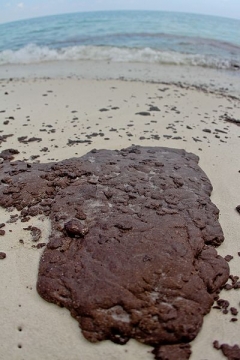
So Breen hopped on a plane over the Fourth of July weekend. He flew from San Diego to New Orleans, then drove to Florida's Santa Rosa Island, where he spent the weekend collecting tar balls off the ocean beaches.

But Breen wasn't done yet. He took some of the gobs of oil home with him. Back at his art desk, he thinned the oil with gasoline, then used it as the ink in several new cartoons about the BP oil spill. In addition to criticizing BP itself, Breen's cartoons tackle America's addiction to oil and the lax regulation that allowed the accident to happen in the first place.

"I wanted to channel that outrage in a unique way," Breen told the Associated Press. "Since I'm in the powerful image business, I came up with the oil idea."

The cartoons use a mix of black India ink with spot color (brown, really) from the oil and gasoline. The results are powerful, unforgettable images.

"I was surprised by how well it turned out," Breen told the publishing industry magazine Editor & Publisher "because I just wasn’t sure I’d be able to work with the oil."

You can see Breen's BP cartoons, along with his other work, on the Creators Syndicate website.


(Afterword: I didn't get a chance to interview Breen for this piece, but I did exchange emails with him several times immediately after. Great cartoonist, great guy.)